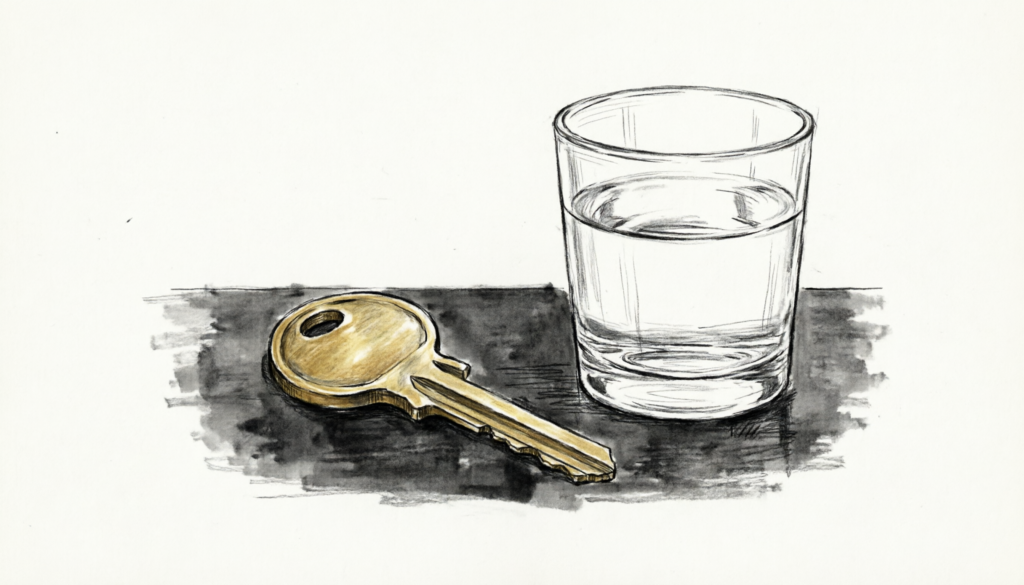
A woman arrived at reception in a tailored coat, but without luggage. Her hands were trembling. My instinct was to ask if she was alright. My training told me to say nothing and simply hand her a key.
In luxury hospitality, empathy is routinely misunderstood as softness. It is not sympathy. It is an operational discipline. It requires the ability to anticipate a need, exercise absolute discretion, and remove friction before the guest or colleague even registers the inconvenience. Empathy is not about being nice. It is about being effective.
Empathy is Reading the Room, Not the Script
The woman at reception had just finalised a divorce. She did not want a conversation. She wanted to disappear into a room. We bypassed the standard check-in script entirely. There were no pleasantries, no unnecessary verification of her home address. We offered a silent escort to a suite, placed a glass of water on the table, and closed the door behind us. We recognised that her immediate need was anonymity and quiet, not a warm welcome.
In the corporate environment, you will encounter a colleague who is visibly off-form on a Monday morning. The standard managerial response is to ask what is wrong, to probe. The empathetic response is to adjust their immediate workload and lower your tone. You do not over-ask. You create the space for them to recalibrate without feeling exposed in front of their peers. The mistake most managers make is confusing empathy with an informal interrogation. True emotional intelligence recognises when silence is the most professional tool available. You manage the environment, not the person.
Empathy is Discretion Under Pressure
A high-profile chief executive once arrived for a confidential, unannounced stay tied to a sensitive corporate merger. A junior receptionist recognised him from the financial press. The risk of a front-desk breach was immediate and severe. The team was briefed to see nothing, say nothing, and process the stay as if he were a phantom. Empathy in this scenario meant protecting his privacy without him ever having to ask for it. It removed a layer of stress from an already strained individual.
Front-of-house and facilities management teams in a corporate headquarters frequently handle confidential restructures or sensitive human resources movements. A leader being escorted from the building, a colleague moving to a new division under difficult circumstances. Empathy in this context is accountability over curiosity. It is ensuring a colleague exiting or transitioning does so with absolute dignity, shielded from the rumour mill and the gaze of the open-plan office. A facilities team that gossips undermines the entire organisation. A team that understands operational discretion becomes an invaluable asset to the board.
Empathy is Standards, Not Favours
A suite was not ready at the promised hour due to an unexpected maintenance delay. The guest was tired and visibly irritated. Offering a complimentary drink or a discount is a favour, and it often feels like a transactional apology that benefits the organisation more than the individual. True empathy provides certainty. We gave an exact time of completion, moved the guest to a private lounge, and assigned a single point of contact. We removed the need for them to chase us for updates.
When the catering delivery fails or the lifts are out of service in a corporate building, the instinct is to over-promise to smooth over the irritation. This is counterproductive. Empathy is over-communicating. It is stating the precise time of resolution, providing a practical alternative, and taking complete ownership of the failure. People do not need a favour when things go wrong. They need a plan. The empathetic leader absorbs that friction, acting as the buffer between the failing system and the frustrated colleague.
These behaviours form the foundation of my R.O.Y.A.L. standards, a framework developed to transition these hotel principles into corporate environments. Empathy must be Restrained, actively avoiding performative concern. It must be Observant, noticing the subtle shifts in behaviour and the details that are left unsaid. It requires a Yielding approach, possessing the confidence to step back and give people the space they require. It demands being Accountable when systems inevitably break down. And ultimately, it is what makes an experience truly Luxe: a flawless, quiet execution that respects the individual without demanding gratitude in return.
Empathy is a measurable KPI. In hotels and in offices, it shows up in staff retention, occupant satisfaction, and the quiet way people speak about you when you have left the room.